
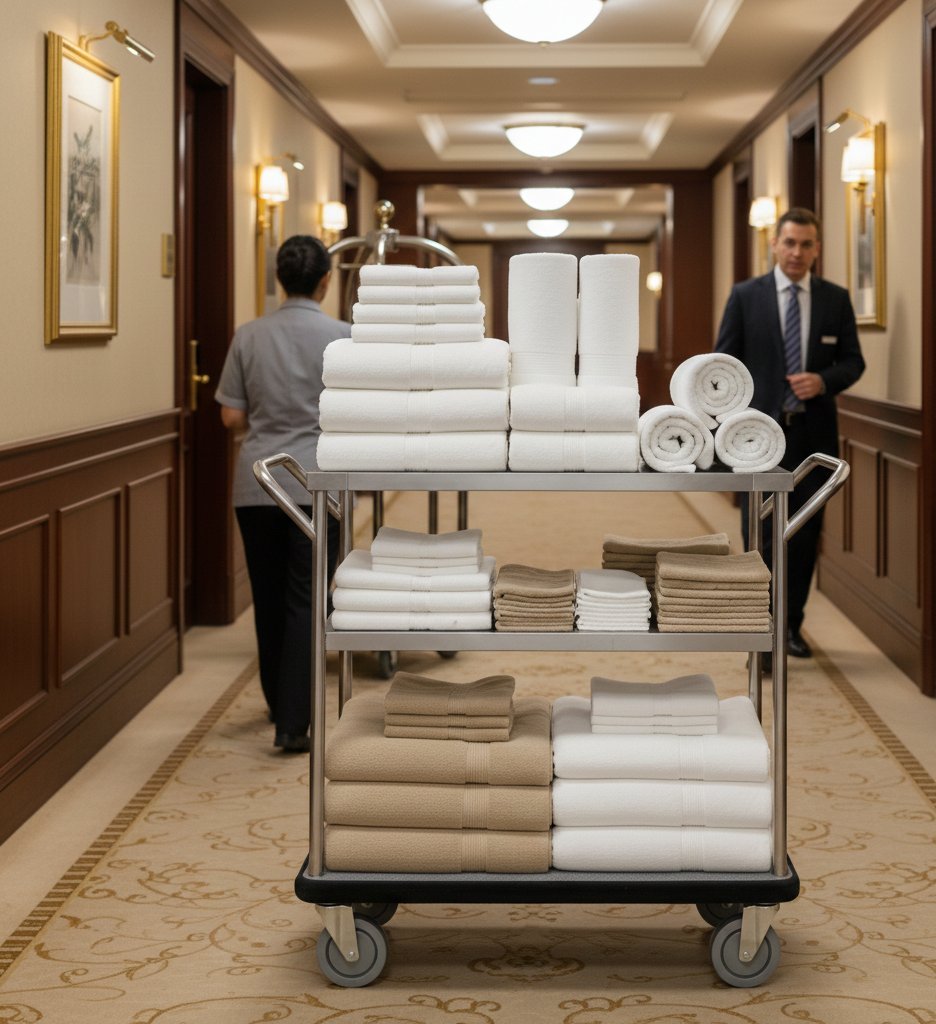
Most hotel procurement conversations start with price. The ones that protect a property long-term start with a shorter, more uncomfortable set of questions, the kind that separate a documented supply partner from a vendor with a good sales pitch. Here are five questions worth asking every textile supplier before you sign, and why the answers matter more than the quote.
1. Can You Prove Where the Cotton Comes From?
“Egyptian cotton” is one of the most misused terms in hospitality procurement. A supplier confident in their origin claim will offer documentation, not adjectives: EUR1 certification and DNA-level cotton verification are the two credentials that actually prove origin, rather than simply asserting it. If a supplier cannot produce paperwork on request, treat the origin claim as marketing, not fact.
2. What Does a Written Wash-Life Warranty Actually Cover?
A verbal promise of durability is not a warranty. A written wash-life warranty, tied to a specific wash count under commercial laundry conditions, gives procurement teams a number to hold a supplier to and a basis for comparing products that look similar on a spec sheet but perform very differently in a 300-cycle-a-year laundry room.
3. Is Pricing Structured Around Minimum Order Quantities?
Many suppliers quote a headline price that only holds at a high minimum order quantity, then adjust it quietly once the order is smaller than expected. Ask directly whether the quoted price reflects your actual order volume, and whether it changes at reorder. A supplier working from a single, transparent one-stop range is easier to hold to a consistent price than one assembling your order from several smaller vendors.
4. How Many Vendors Are Behind Your Supply Chain?
A single point of contact who is actually coordinating five or six unrelated factories is not the same as a one-stop hospitality supplier. Ask how many separate manufacturing relationships sit behind your order, and how consistency, in GSM, colour and finish, is maintained across them. Fewer, better-documented relationships tend to produce more consistent product than a long list of subcontracted vendors.
5. What Happens When a Shipment Is Delayed?
Every supply chain experiences delays eventually. What separates a reliable partner is not the absence of delays but a documented process for communicating them, clear lead times, a single accountable contact, and a plan for the property when a delivery date moves. If a supplier cannot describe this process before you order, you will find out how they handle it the hard way.
The Underlying Question
Each of these questions comes back to the same thing: can a claim be supported with a document, or does it rely on trust alone. KEMET answers procurement questions with certifications, written warranties and documented specifications rather than promises, because that is what a hotel group evaluating a new supplier actually needs to see.
Hotel Procurement Questions: How to Use the Answers
Use these hotel procurement questions in your next supplier review and compare answers side by side. A documented partner can answer every one with certificates, origin documents and a clear delivery process. For the wider discipline, see this overview of procurement.
More on Hotel Procurement Questions
Read how cost per wash compares ranges and see our certifications. When you are ready, request an evaluation sample kit.
Want the Documentation Behind These Answers?
Request our certification pack and evaluation sample kit, and see the specifications for yourself.